
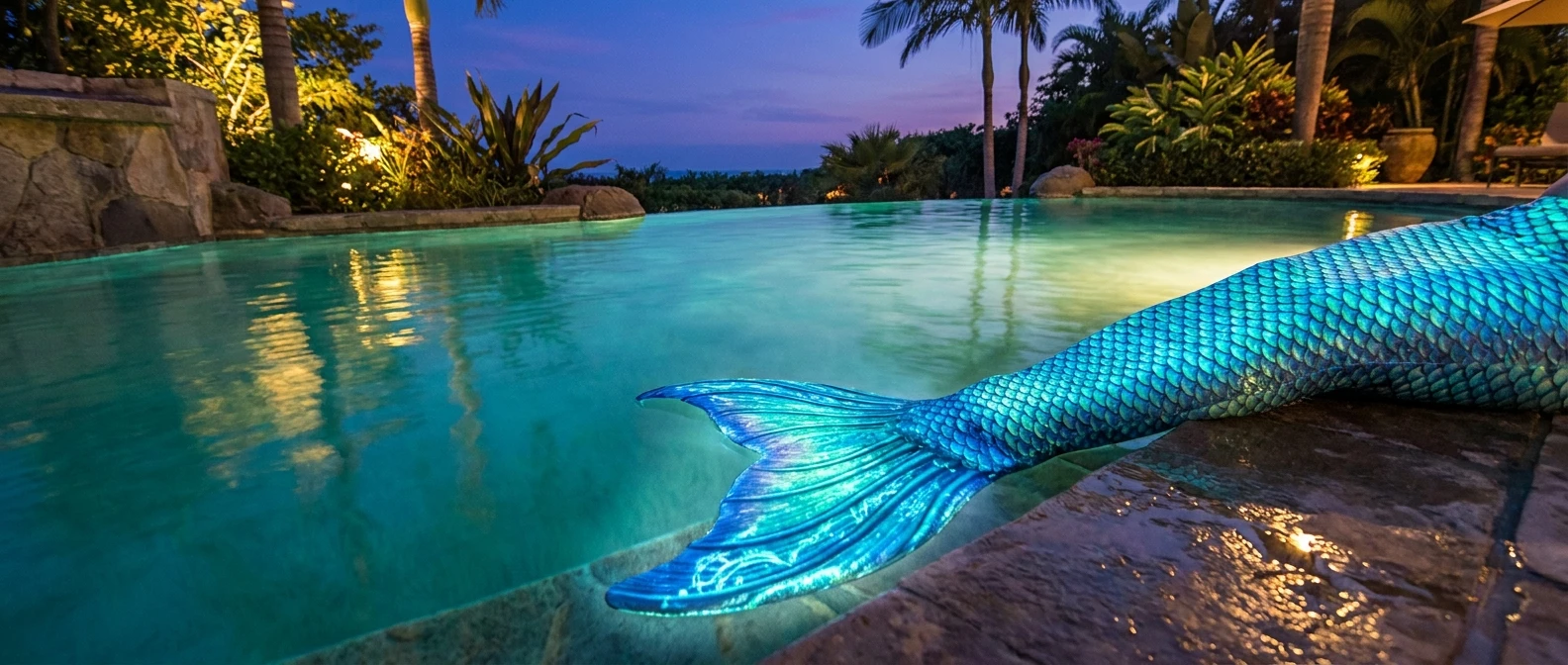
The Incredible Journey of Eric Ducharme
When discussing the global phenomenon of professional mermaiding, one name constantly surfaces: Eric Ducharme. This dedicated artist and entrepreneur took a childhood fascination with the aquatic world and built an internationally recognized manufacturing empire. If you are fascinated by the fusion of performance art, hydrodynamics, and practical special effects, you have likely encountered his work. He is widely known as the “Mertailor,” a title he earned by crafting some of the most realistic, functional, and visually stunning mermaid tails on the market.
For many, the idea of swimming in a custom silicone tail seems like pure fantasy. Yet, Eric Ducharme turned that fantasy into a tangible, accessible reality for hobbyists, professional performers, and marine enthusiasts worldwide. His facility in Florida produces everything from beginner-friendly fabric tails to high-grade, custom-sculpted silicone appendages used in professional aquariums and underwater photography. The dedication required to master this craft involves a deep understanding of anatomy, material science, and fluid dynamics.
Read also: Roy Green: The Ultimate Dual-Threat Football Legend; Barry Deley: The Incredible Journey of a Sports Broadcaster.
This comprehensive overview explores the mechanics, history, and technical achievements behind his brand. Whether you are a curious observer of the mermaiding subculture or an aspiring aquatic performer looking to invest in your first professional setup, understanding the craftsmanship of these aquatic prosthetics offers incredible insight into a highly specialized industry.
The Core Mechanics of a Professional Tail
Choosing a functional tail requires more than just picking a favorite color. The value proposition of a product created by Eric Ducharme lies in the seamless integration of aesthetics and athletic performance. A professional tail must endure the harsh chemical environments of chlorinated pools, the abrasive surfaces of natural reefs, and the intense physical strain of a swimmer executing powerful dolphin kicks.
To understand the variations available to performers, we can categorize the primary offerings based on material composition and intended use. Professional performers at iconic locations like Weeki Wachee require entirely different equipment than a casual weekend swimmer.
| Tail Category | Primary Material | Ideal User Profile |
|---|---|---|
| Eco-Fabric Lines | Spandex and recycled polyester blend | Beginners and recreational swimmers needing lightweight gear. |
| Neoprene Hybrids | Neoprene with silicone accents | Intermediate performers looking for enhanced buoyancy and durability. |
| Full Silicone Custom | Platinum-cure Dragonskin silicone | Professional entertainers, underwater models, and dedicated hobbyists. |
When selecting your equipment, you must consider three critical factors that impact both safety and performance in the water.
- Assess your swimming capability: Swimming with bound legs requires substantial core strength. You must master the dolphin kick without equipment before strapping into a restrictive garment.
- Evaluate the water environment: Saltwater provides more natural buoyancy than freshwater, while chlorinated pools require rigorous aftercare for silicone materials to prevent degradation.
- Determine the weight capacity: A fully custom silicone tail can weigh between 30 and 50 pounds on land. You must ensure you have the physical strength to carry, wear, and maneuver this weight safely.
By balancing these factors, performers can select equipment that enhances their aquatic experience rather than hindering their movement.
Origins of a Passion
The story of Eric Ducharme begins long before the modern mermaiding craze took over social media. Growing up in Florida, surrounded by springs and ocean coastlines, he developed an intense fascination with marine life and aquatic mythology. As a young child, he fashioned makeshift tails out of garbage bags and tape, determined to replicate the graceful movements of the performers he saw at local roadside attractions. This early experimentation laid the foundation for a lifelong obsession with functional aquatic design.
Evolution of the Craft
As he matured, so did his chosen materials. Tape and plastic gave way to spandex, and eventually, he taught himself the complex art of mold-making and silicone casting. Creating a tail that looks like fish scales on land is one challenge; creating a prosthetic that moves organically in the water without tearing requires precise engineering. He spent years refining his proprietary blends of pigments and curing agents, ensuring that the finished products would stretch comfortably over a human body while resisting the immense drag forces of underwater propulsion.
Modern State of the Mertailor Brand
Today, the operation has grown from a solitary garage workshop into a massive manufacturing facility and public aquarium space. The brand not only produces thousands of tails annually but also advocates for marine conservation and education. By blending entertainment with environmental awareness, the company has established itself as a cornerstone of the global mermaiding community, setting industry standards for safety, quality, and artistic innovation.
The Science of Silicone Prosthetics
Behind the glittering scales and vibrant colors lies a rigorous application of material science. The manufacturing process relies heavily on platinum-cure silicone, a specialized elastomer known for its exceptional tear strength and skin-safe properties. Unlike cheaper tin-cure silicones, the platinum variant remains flexible and stable over years of use, resisting the degrading effects of ultraviolet light and pool chemicals.
Hydrodynamics and Buoyancy Control
Designing a functional tail is essentially an exercise in hydrodynamics. The human body is not naturally optimized for aquatic speed, so the tail must act as an efficient foil. The internal structure always features a monofin—a rigid or semi-rigid blade that displaces water. The silicone skin stretched over this fin must maintain a specific drag coefficient; if the scales are too textured, they create excessive turbulence and exhaust the swimmer. If they are too smooth, the tail loses its organic, realistic appearance.
- Neutral Buoyancy: High-quality silicone naturally sinks, so manufacturers must calculate the exact volume of air trapped in the monofin pocket to achieve neutral buoyancy, allowing the swimmer to hover effortlessly.
- Propulsion Mechanics: The stiffness of the internal monofin dictates the energy transfer from the swimmer’s hips down to the tip of the fluke. A stiffer blade offers higher speed but demands significantly more ankle and core strength.
- Thermodynamic Properties: Silicone acts as an insulator. Swimmers operating in warm tropical waters must monitor their core temperature closely to prevent overheating, as the material traps body heat efficiently.
Day 1: Assessing Your Aquatic Skills
Before purchasing any professional aquatic gear, you must verify your foundational swimming abilities. Spend your first day in a controlled pool environment practicing breath control, treading water without using your arms, and swimming consecutive laps using only a dolphin kick. Core strength is the absolute prerequisite for safe mermaiding.
Day 2: Understanding Monofin Mechanics
Procure a basic, standalone monofin without a fabric skin. Practice strapping your feet in securely and familiarize yourself with the quick-release mechanisms. Spend this day learning how the blade displaces water and how to steer using your shoulders and hips rather than your legs.
Day 3: Selecting Your First Fabric Tail
Once you are comfortable with the monofin, transition to a lightweight spandex or eco-fabric tail. These beginner-friendly options allow you to experience the sensation of bound legs without the overwhelming weight of silicone. Focus on smooth, rolling body movements.
Day 4: Mastering the Dolphin Kick
Dedicate this training session entirely to refining your propulsion technique. The power for the dolphin kick should originate from your chest and flow down through your core and hips, finishing with a whip-like motion at the feet. Avoid bending your knees excessively, as this creates drag and ruins the illusion of a continuous tail.
Day 5: Upgrading to Advanced Materials
If you have mastered the basics, begin researching hybrid or full-silicone options. Measure yourself meticulously according to the manufacturer’s guidelines, as a proper fit is crucial for preventing water pockets that can act as parachutes and stall your forward momentum.
Day 6: Safety Protocols in Open Water
Moving from a pool to a natural body of water introduces currents, tides, and reduced visibility. Always swim with a dedicated spotter or “mertender” on the surface. Practice emergency removal of your equipment in shallow water so you can quickly free your legs if you become fatigued.
Day 7: Joining the Mermaiding Community
Connect with local pods or online groups dedicated to the hobby. Sharing knowledge about maintenance, safety, and performance techniques will accelerate your learning curve and introduce you to a network of supportive, like-minded individuals.
Separating Fact from Fiction
Myth: Mermaiding is just a trivial children’s activity or a casual pool game.
Reality: Professional mermaiding is a demanding athletic discipline. Performers must possess advanced freediving certifications, exceptional breath-holding capabilities, and immense muscular endurance to maneuver heavy equipment gracefully.
Myth: Anyone can jump into a silicone tail and immediately start swimming beautifully.
Reality: Swimming in a 40-pound prosthetic requires weeks of specialized training. Without proper core conditioning and monofin experience, a beginner will likely struggle to stay afloat, let alone perform elegant underwater acrobatics.
Myth: Eric Ducharme uses standard latex or cheap rubber to mass-produce his custom creations.
Reality: The facility strictly utilizes premium, medical-grade, platinum-cure silicone. Each custom piece is meticulously hand-painted and tailored specifically to the exact measurements of the client’s lower body.
Myth: You cannot use silicone prosthetics in heavily chlorinated swimming pools.
Reality: While chlorine does degrade materials over time, high-quality silicone is remarkably resilient. Proper maintenance, including a thorough freshwater rinse immediately after exposure, significantly prolongs the lifespan of the equipment.
Who is Eric Ducharme?
He is a renowned artist, entrepreneur, and the founder of the Mertailor brand, specializing in highly realistic aquatic prosthetics and performance gear.
Where is the Mertailor facility located?
The primary manufacturing facility and public aquarium attraction are based in Lecanto, Florida.
How much does a custom tail weigh?
Depending on the size of the swimmer and the complexity of the fluke design, a fully custom silicone piece typically weighs between 30 and 50 pounds on dry land.
Does he make tails for men?
Yes. The equipment is custom-made for all body types, genders, and sizes, catering to a diverse global community of performers.
Are silicone tails safe for beginners?
No. Beginners should always start with a basic monofin and a lightweight fabric skin to build the necessary muscle memory and core strength before handling heavy silicone.
How long does a custom order take?
Because each piece is sculpted, cast, and painted by hand, a fully custom order can take several months from the initial consultation to final delivery.
What is the main material used?
The industry standard for professional aquatic prosthetics is platinum-cure Dragonskin silicone, known for its stretch, durability, and realistic texture.
Can you visit his aquarium?
Yes. The facility in Florida includes a public space where visitors can view marine life and occasionally watch live underwater performances.
Do performers wear goggles?
During professional photo shoots and live shows, performers typically train themselves to keep their eyes open underwater without masks or goggles to maintain the theatrical illusion.
How do you clean the equipment?
Equipment must be thoroughly rinsed with fresh, clean water inside and out, then laid flat to dry completely away from direct sunlight to prevent mold and material breakdown.
The artistry and engineering pioneered by Eric Ducharme have fundamentally changed how people interact with the water. By bridging the gap between fantasy and functional athletics, he has empowered a new generation of aquatic performers. Whether you want to pursue a career in underwater entertainment or simply experience the magic of gliding through a coral reef with unmatched speed, understanding this specialized craft is the first step. Equip yourself with the right knowledge, train your body for the physical demands, and start planning your own aquatic adventures today!






