
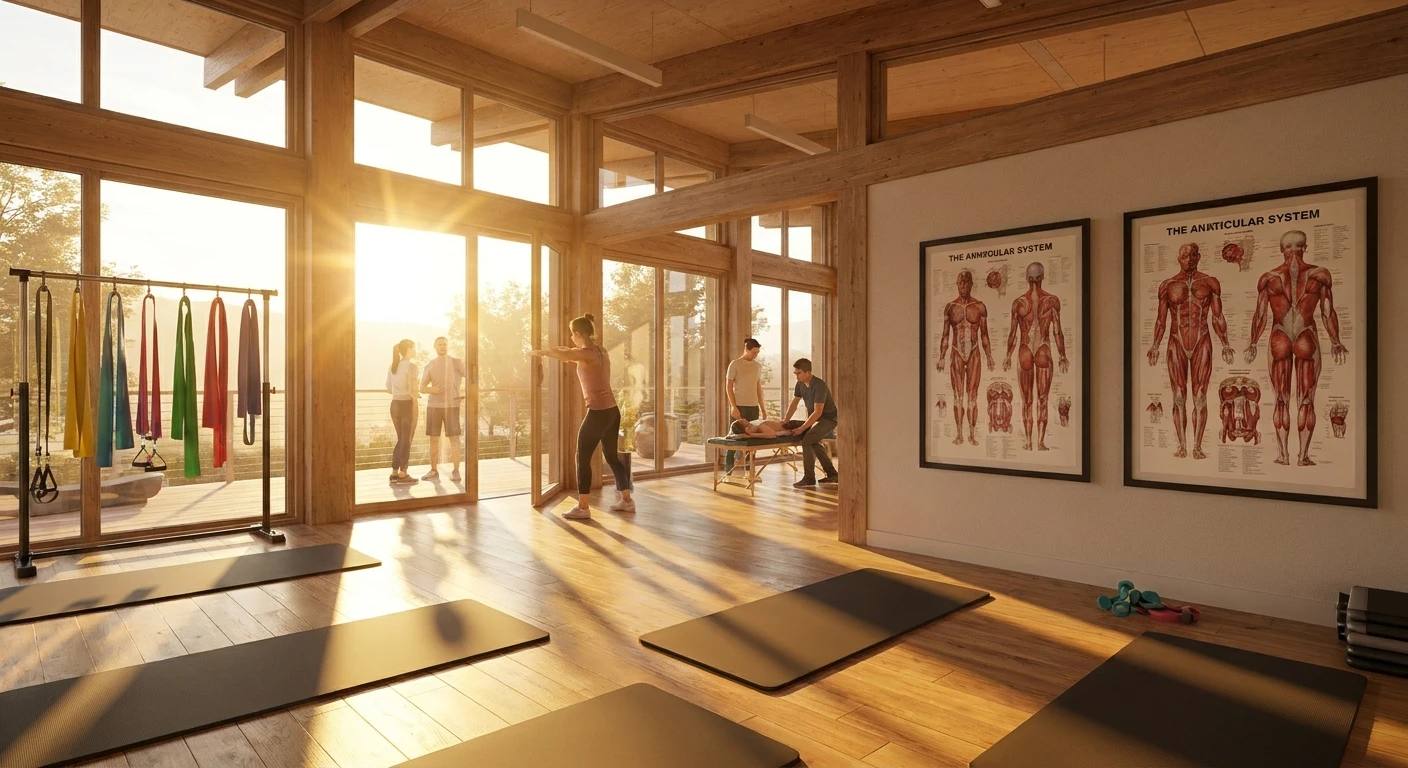
Maximizing Potential at a Serratus Movement Centre
Finding the right Serratus Movement Centre can dramatically alter how your body handles physical stress, athletic performance, and daily mobility. The serratus anterior is an often-overlooked muscle that plays a critical role in shoulder health, scapular stability, and overall upper body mechanics. Facilities dedicated strictly to advanced movement mechanics provide a highly focused environment where precise neuromuscular control takes precedence over heavy, unstructured lifting. When individuals experience shoulder impingement, neck stiffness, or lack of power in overhead movements, the root cause frequently lies in poor scapulothoracic rhythm. A specialized center addresses these dysfunctions through targeted assessments, customized interventions, and consistent biomechanical feedback.
By prioritizing the stabilization of the shoulder girdle, a Serratus Movement Centre bridges the gap between clinical physical therapy and high-performance strength conditioning. The objective is to create a seamless transition from rehabilitation to functional excellence. Rather than isolating muscles purely for aesthetic purposes, the programming in these environments emphasizes how muscles coordinate during complex, multi-joint actions. Understanding the precise mechanics of your shoulder blades dictates how effectively your arms can generate and absorb force, making this specialized focus incredibly valuable for athletes, office workers, and manual laborers alike.
Read also: Tim Cartmell: Master of BJJ and Chinese Internal Martial Art; YYC Security Wait Times: A Complete Airport Guide.
Core Benefits and Methodologies
The value proposition of advanced movement facilities centers on correcting biomechanical deficits before they lead to chronic injury. Two primary examples highlight this approach. First, overhead athletes, such as tennis players and swimmers, rely heavily on upward rotation of the scapula. Without optimal serratus activation, the acromion compresses the rotator cuff tendons, leading to pain. A specialized movement center corrects this by retraining the upward force couple. Second, desk workers often develop a postural adaptation where the shoulder blades remain chronically protracted and downwardly rotated. Movement specialists utilize specific tactile feedback and exercises to restore balance between the chest, upper back, and serratus.
Structured programming at a Serratus Movement Centre typically yields several profound benefits:
- Restored Scapular Rhythm: Ensures the shoulder blade glides smoothly along the rib cage during arm elevation, preventing impingement.
- Enhanced Core Integration: Connects the stabilizing forces of the rib cage to the upper extremities, improving power transfer in throwing and pushing activities.
- Neuromuscular Re-education: Overcomes compensatory movement patterns developed from past injuries, teaching the brain how to recruit the correct muscle fibers efficiently.
- Injury Resilience: Builds a robust structural foundation that can withstand unexpected physical loads and repetitive stress.
| Movement Goal | Serratus Function | Center Intervention |
|---|---|---|
| Overhead Pressing | Upward rotation and posterior tilt of the scapula | Wall slides with foam roller to enforce proper glide |
| Pushing/Punching | Protraction of the scapula around the rib cage | Banded serratus punches with isometric holds |
| Postural Correction | Anchoring the medial border of the scapula | Closed-chain scapular push-ups and tactile cueing |
Origins of Specialized Movement Therapy
The foundation of what we now recognize as a Serratus Movement Centre stems from early post-WWII rehabilitation protocols. During this era, physical therapists recognized that localized muscle isolation was insufficient for returning patients to complex occupational tasks. Early pioneers in orthopedic medicine began studying the kinetic chain, realizing that shoulder function was inherently linked to the stability provided by the thoracic spine and the rib cage. The concept of scapulothoracic rhythm became a cornerstone of physical therapy, establishing the groundwork for highly targeted movement interventions.
Evolution of Scapular Focused Training
As sports science advanced through the late 20th century, athletic trainers began identifying specific muscular imbalances responsible for chronic shoulder injuries. The serratus anterior, previously treated as a secondary respiratory muscle, was identified as the primary stabilizer preventing scapular winging. This realization shifted the paradigm of upper body training. Instead of merely pressing heavier weights, athletes were prescribed corrective exercises focusing on protraction and upward rotation. Movement centers began to adopt these clinical practices, integrating them into daily athletic conditioning to prevent injuries before they occurred.
The Modern State of Movement Centers
Today, a modern Serratus Movement Centre combines cutting-edge biomechanical analysis with functional fitness. These facilities utilize video analysis, electromyography (EMG) biofeedback, and specialized resistance equipment to map an individual’s unique movement signature. Coaches and therapists collaborate to design fluid programs that transition clients from low-threshold motor control exercises to high-velocity dynamic actions. The contemporary approach treats the shoulder girdle not just as a joint to be rehabilitated, but as a central hub of upper body athletic power that requires continuous, precise maintenance.
Biomechanics of the Scapulothoracic Joint
The scapulothoracic joint is unique because it is not a true anatomical joint; rather, it is a physiological articulation where the concave surface of the shoulder blade glides over the convex surface of the posterior rib cage. This movement is dictated entirely by soft tissue balance. The serratus anterior works in synergy with the upper and lower trapezius to form a force couple that rotates the scapula upward during arm elevation. If the serratus is inhibited, the deltoid and upper trapezius dominate, leading to a dysfunctional shrugging motion that severely limits overhead mobility and increases joint shear forces.
Neurological Activation and Muscle Firing Patterns
Motor control is just as critical as muscular strength. A key focus within a Serratus Movement Centre is ensuring the brain signals the muscle to contract at the precise moment it is needed. Poor posture can lead to reciprocal inhibition, where overactive pectoral muscles cause the nervous system to downregulate the serratus anterior. Retraining requires high-focus, low-fatigue exercises that rebuild the neural pathways.
- Nerve Supply: The muscle is uniquely innervated by the long thoracic nerve, which lies superficially and is vulnerable to traction injuries or compression.
- Anatomical Attachments: Originates on the lateral surfaces of the upper eight or nine ribs and inserts along the medial border of the scapula.
- Force Coupling: Works synchronously with the lower trapezius to maintain posterior tilt of the scapula during arm elevation, maximizing subacromial space.
- Ventilatory Role: Acts as an accessory muscle for respiration, expanding the rib cage during deep, forced inhalation.
Day 1: Baseline Assessment and Scapular Awareness
The initial phase at any high-level movement facility begins with identifying dysfunctions. Day one focuses heavily on postural screening, observing the resting position of the scapula, and testing active range of motion. Practitioners look for early signs of winging or compensatory shrugging. Clients perform basic awareness drills, such as breathing into the lateral rib cage and practicing isolated protraction and retraction without utilizing the arms. Establishing this mind-muscle connection is the mandatory first step before introducing external load.
Day 2: Isometric Protraction and Tissue Release
Once awareness is established, the program moves into releasing tight antagonistic muscles and stimulating the serratus. Soft tissue work targets the pectoralis minor and latissimus dorsi, which often restrict upward scapular rotation. Following the release work, clients perform isometric holds. Wall push-aways or supine banded reaches teach the body how to sustain a protracted scapular position under minimal stress, reinforcing the neural pathways necessary for stabilization.
Day 3: Closed Kinetic Chain Fundamentals
Day three transitions into closed kinetic chain exercises, where the hands are fixed to a solid surface. This environment provides excellent proprioceptive feedback to the shoulder joints. Exercises such as scapular push-ups, bear crawls, and quadruped rocking are introduced. The focus remains strictly on the quality of the movement. The center of mass is shifted to challenge the serratus anterior to stabilize the thorax against gravity, building endurance in the exact positions where the muscle is most active.
Day 4: Open Kinetic Chain Progressions
With closed-chain stability improving, open kinetic chain movements are integrated. These exercises require the shoulder blade to stabilize while the arm moves freely through space, mimicking throwing or reaching. Practitioners at the movement center prescribe dynamic banded punches, dumbbell pullovers, and upward reaching variations. The challenge here is maintaining scapular protraction and upward rotation while managing the changing leverage of the moving arm.
Day 5: Dynamic Integration and Core Coupling
The serratus anterior does not work in isolation; it shares fascial connections with the external obliques. Day five focuses on integrating these core systems. Exercises blend rotational core movements with scapular protraction, such as cable woodchoppers combined with a forward punch, or pallof presses with an extended reach. This session teaches the body to transfer force generated by the hips and core through a stable shoulder girdle, maximizing athletic power and functional strength.
Day 6: Load Management and Resistance Training
Once optimal movement patterns and core integration are established, the program introduces heavier external loads. The goal is to build structural hypertrophy and absolute strength. Heavy sled pushes, landmine presses, and kettlebell bottom-up presses are utilized. The coaches monitor form rigorously, ensuring that as the weight increases, the client does not revert to old compensatory habits, such as elevating the shoulders excessively or losing the active protraction at the top of a pressing movement.
Day 7: Active Recovery and Neuromuscular Patterning
The final day of the foundational cycle emphasizes recovery and the solidification of motor learning. High-intensity loads are removed, and the focus shifts to mobility, breathing mechanics, and light, high-repetition patterning. Yoga-inspired movements, such as the downward dog to plank transition, are used to flush the tissues with blood while gently reinforcing the mechanics learned throughout the week. This ensures the nervous system adopts the improved scapulothoracic rhythm as its new default setting.
Myths and Realities in Scapular Training
Myth: You only need to train the chest and back to achieve a balanced, healthy upper body.
Reality: Chest and back exercises often prioritize the primary movers (pecs and lats) while neglecting intrinsic stabilizers. The serratus anterior requires specific, targeted movements emphasizing protraction and upward rotation to function optimally.
Myth: Scapular winging is a permanent structural issue that can only be fixed with surgery.
Reality: While severe nerve damage can cause permanent winging, the vast majority of cases stem from muscular weakness and poor motor control. Consistent, targeted rehabilitation can drastically improve or entirely correct this condition.
Myth: Movement centers are identical to standard commercial gyms.
Reality: Commercial gyms focus on general fitness and aesthetics using heavy machinery. Specialized movement centers prioritize biomechanical efficiency, joint health, and neuromuscular re-education through highly individualized, corrective programming.
Myth: Stretching the shoulder joint cures all types of impingement pain.
Reality: Shoulder impingement is frequently caused by a lack of stability and poor scapular mechanics, not just tight tissues. Over-stretching a hypermobile joint can exacerbate the problem; strengthening the serratus anterior is often the superior solution.
What is the main focus of a Serratus Movement Centre?
The primary focus is optimizing the biomechanics of the shoulder girdle and rib cage. By targeting the stabilization muscles, particularly the serratus anterior, these centers help individuals overcome movement dysfunctions, improve athletic performance, and eliminate chronic upper body pain.
How does the serratus anterior affect daily posture?
It anchors the shoulder blade to the rib cage. When weak, the shoulders tend to round forward, and the shoulder blades flare out, leading to a hunched posture. Strengthening this area pulls the scapula flat against the back, instantly improving upright posture.
Who benefits most from specialized movement training?
Everyone from elite overhead athletes (pitchers, tennis players) to individuals recovering from rotator cuff injuries or desk workers suffering from chronic neck and shoulder tension will see substantial benefits from specialized biomechanical conditioning.
Can complete beginners join a movement center?
Absolutely. Because the training emphasizes fundamental movement mechanics, body awareness, and injury prevention, it is an ideal starting point for beginners before they engage in traditional, heavy resistance training.
What equipment is typically used in these facilities?
You will find less heavy machinery and more functional tools. Resistance bands, kettlebells, suspension trainers, medicine balls, light dumbbells, and biofeedback tools are commonly used to challenge stability and motor control.
How often should I train my scapular muscles?
Because they are postural endurance muscles, they respond well to high frequency. Performing specific activation and mobility drills 3 to 5 times a week yields the best results for neurological adaptation and muscular endurance.
Does this training help with rotator cuff injuries?
Yes. The rotator cuff works closely with the scapular stabilizers. If the shoulder blade is unstable, the rotator cuff has to overwork, leading to tendinitis or tears. Correcting scapular movement significantly unloads the rotator cuff tissues.
Optimizing your upper body biomechanics is not a luxury reserved for professional athletes; it is a necessity for long-term physical resilience. Addressing underlying imbalances before they manifest as chronic pain allows you to move with greater freedom, power, and confidence. Take proactive control of your physical well-being. Start prioritizing your shoulder health and book a comprehensive biomechanical assessment at your nearest movement facility today.