
What is actually going on with Calgary’s water?
So, if you live in Calgary, you’ve probably spent the last few days staring at your shower head and wondering if today is the day it finally runs dry. It sounds like a plot from a bad disaster movie, but the water crisis is very real. It all started with a massive break in the “Bearspaw South Feedermain.” For those who aren’t city engineers, that’s basically the giant straw that feeds water to over a million people. When that thing snapped, the city’s water pressure plummeted, and suddenly, we were all told to stop using water for anything that wasn’t absolutely necessary.
Honestly, it’s a bit of a shock to the system. We’re used to turning on the tap and just having it there. Now, everyone is talking about “stage four restrictions” like they’re experts in municipal policy. The vibe in the city is a mix of genuine concern and that classic Calgary “we’ll get through it” attitude. But let’s be real, skipping a load of laundry is one thing; not being able to take a proper hot shower after a long day at work is where most of us start to lose it.
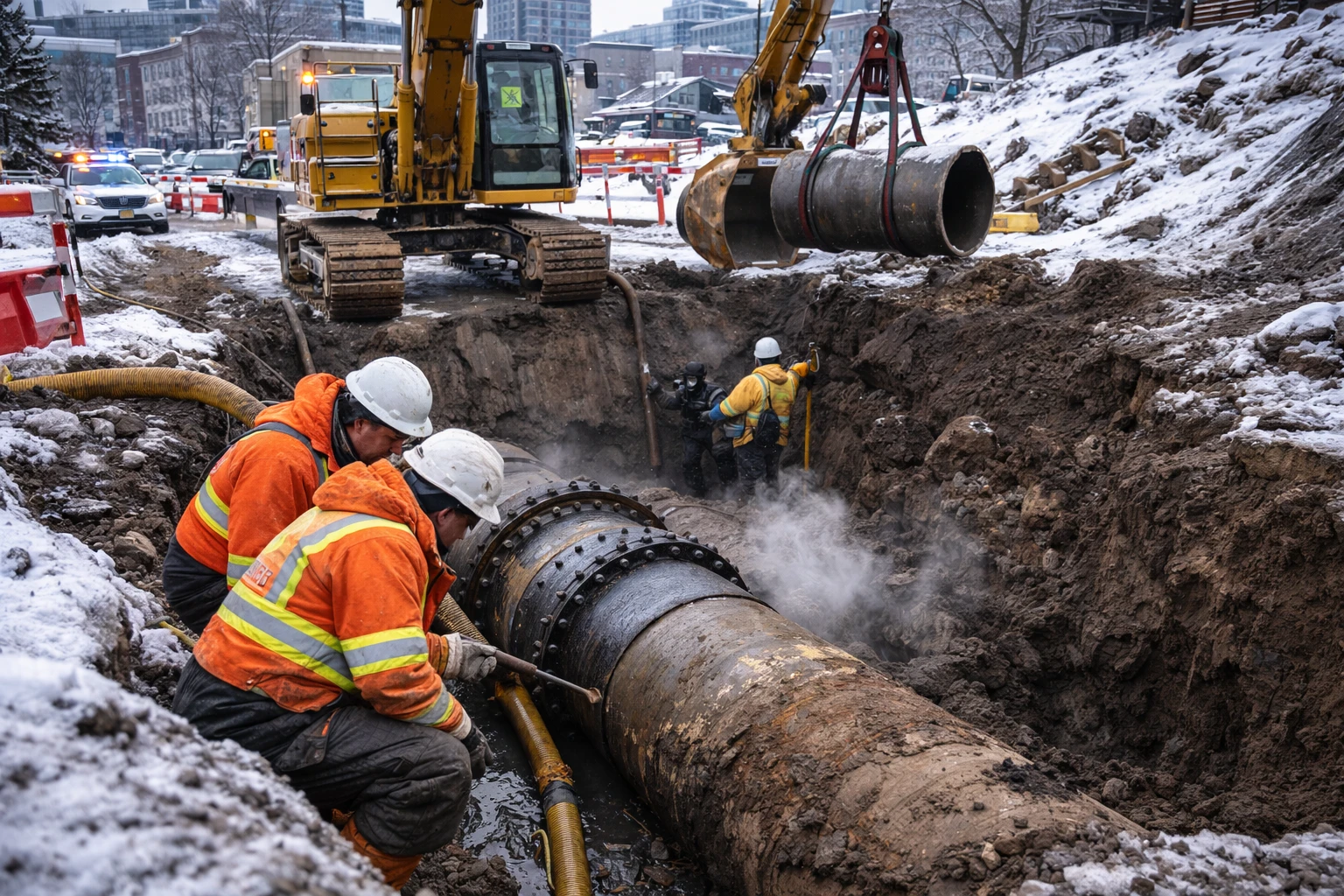
The city crews have been working around the clock. You’ve probably seen the photos of the massive hole in the ground near 16th Avenue NW. It’s huge. And it’s not just one break anymore. As they started fixing the main one, they found “hot spots”-basically other parts of the pipe that were about to blow. It’s like a giant, rusty game of whack-a-mole underground.
The current state of the repairs
The timeline for getting things back to normal has been moving more than the Bow River in spring. Initially, we hoped for a quick fix, but then the bad news dropped about those extra weak spots. The city is now looking at a much longer repair window. They have to dig up multiple sections, replace the massive concrete segments, and then-this is the annoying part-flush the whole system and test the water for safety.
You can’t just slap some duct tape on a pipe this big and call it a day. These are two-meter wide pipes. They are massive. To give you an idea of the scale, here is a quick look at what the repair process actually looks like.
| Repair Phase | What’s Actually Happening | Estimated Timeframe |
|---|---|---|
| Excavation | Digging out the dirt and exposing the broken pipe segments. | Completed for main break |
| Replacement | Lowering new concrete segments into the ground and sealing them. | Ongoing for hot spots |
| Backfilling | Filling the hole back up with dirt and gravel once the seals are set. | Pending |
| Flushing & Testing | Running water through at high pressure to clean out debris and testing for bacteria. | Final Step |
It’s a slow process because if they rush it and the pipe bursts again under pressure, we’re back to square one, but worse. Nobody wants that. The city is being cautious, and while it’s frustrating to hear “another few weeks,” it’s better than the whole system collapsing.
What you can and cannot do right now
The rules are pretty strict, and yes, there are fines if you decide to fill up your pool or wash your truck in the driveway. Stage four outdoor water restrictions mean exactly what they say: zero outdoor water use. No sprinklers, no hoses, no pressure washers. If it’s outside and uses city water, don’t touch it.
Inside the house, it’s a bit more about “voluntary” stuff, but the city is watching the total consumption levels like a hawk. If the level goes too high, we risk the reservoirs running dry, and that’s when the taps actually stop working. We don’t want to reach that point.
* Stop all outdoor watering. Your lawn might go brown, but it’ll bounce back.
* Take shorter showers. Aim for three minutes or less. It’s a challenge, but you can do it.
* Only run the dishwasher and washing machine when they are completely full.
* Turn off the tap while brushing your teeth or shaving. Every drop counts.
I know it feels a bit like being back in elementary school with all these rules, but it’s the only way to keep the hospitals and fire departments running. Imagine if a fire broke out and the hydrants didn’t have enough pressure? That’s the nightmare scenario the city is trying to avoid.
Why did this happen in the first place?
This is the question everyone is asking at the pub. How does a major city’s main artery just give up? Well, the pipe was laid back in the 70s. While it was supposed to last much longer, concrete and steel don’t always play nice with the soil conditions in certain parts of Calgary. Over time, the wires inside the concrete corrode and snap.
There’s also the issue of “unseen” wear and tear. You can’t exactly walk inside a pressurized water main to check for cracks every Tuesday. The city uses some tech to monitor things, but clearly, it wasn’t enough to catch this one before it went boom. It’s a wake-up call for the city’s infrastructure planning, for sure.
The cost of these repairs is going to be astronomical. We’re talking millions of dollars. But honestly, most Calgarians just want to be able to flush the toilet without feeling guilty right now. We can argue about the budget later; right now, we just need the water.
Comparing our situation to other cities
Calgary isn’t the first city to deal with this, though it feels like it. Other Canadian cities have had similar “infrastructure heart attacks.” It’s a common theme in North America where cities grew fast in the mid-20th century and now the bills are coming due for all those underground pipes.
| City | Incident Type | Outcome |
|---|---|---|
| Montreal | Main break (various) | Frequent issues due to aging 100-year-old pipes. |
| Winnipeg | Frozen mains/breaks | Major winter disruptions leading to long-term upgrades. |
| Calgary | Bearspaw Feedermain | Major city-wide crisis due to size of the pipe. |
The difference here is the sheer size of the Bearspaw main. It’s the “Big Daddy” of our water system. When it goes, there isn’t an easy backup. It’s like losing the main highway through the city; the side streets (smaller pipes) just can’t handle the traffic.
How to stay sane during the restrictions
Let’s talk about the mental side of this. It’s annoying. It’s stressful. You’re worried about your plants dying, and you’re sick of dry shampoo. But there are ways to make it easier. A lot of people have started collecting “grey water”-that’s the water that runs while you’re waiting for the shower to get hot-to water their indoor plants or even to manually flush the toilet.
It’s also a good time to check in on your neighbors. If you have an elderly neighbor, maybe they need a hand hauling some water from one of the city’s water fill stations. Speaking of which, the city has set up several stations where you can get non-potable water for your gardens. It’s a bit of a hassle to drive there and fill up jugs, but if you have a prize-winning rose bush, it might be worth it.
* Use a bucket in the shower to catch excess water.
* Keep a jug of water in the fridge so you don’t have to run the tap to get it cold.
* Wipe down counters with a damp cloth instead of spraying them with water.
The “water-saving” hacks are all over social media right now. Some are genius, some are… well, a bit gross. Use your best judgment. But the point is, if we all do a little bit, it keeps the pressure in the system stable.
The impact on local businesses
It’s not just residents feeling the pinch. Local businesses, especially those that rely on water, are struggling. Car washes are closed, and some laundromats are limiting hours. Restaurants are still open, but they are doing everything they can to minimize water use-think paper plates and no “water by default” on the table.
If you want to support your local community, keep going to these places. They are doing their best under tough conditions. Just don’t expect a big glass of ice water the second you sit down. And maybe don’t ask for a car wash right now-they’ll probably just give you a confused look.
The construction industry is also feeling it. Mixing concrete and dust suppression both require a lot of water. Some projects are being delayed, which has a knock-on effect on the local economy. It’s a reminder of how much we rely on this one basic resource.
What happens when the repairs are done?
When the news finally breaks that the pipe is fixed, don’t go running to fill the bathtub just yet. The city will have to slowly ramp up the pressure. If they turn the “tap” on full blast immediately, the sudden surge could cause other weak spots to burst. It’s going to be a gradual return to normal.
Also, there will be a period of “boil water” advisories for some areas. Even after the pipe is fixed, the water has to be tested for safety. You don’t want to drink anything that’s been sitting in a construction zone. Keep an eye on the official city alerts. They’ve been pretty good at keeping us updated through the mobile app and their website.
Long term, this is going to spark a massive debate about how Calgary manages its infrastructure. We’ll likely see more investment in pipe monitoring and maybe even some redundant lines so that one break doesn’t paralyze the whole city next time. But for now, we’re just focused on getting through the week.
Community spirit in the face of a drought
One cool thing that’s come out of this is seeing how Calgarians have stepped up. People are sharing tips, helping out neighbors, and generally being pretty patient with the city workers who are out there in the mud and heat. It’s a very Calgary response to a crisis. We’ve seen it with the floods, and we’re seeing it again now.
Sure, there are always a few people who think the rules don’t apply to them, but for the most part, the city has really pulled together. The reduction in water use has been impressive. We’ve managed to cut our consumption by millions of liters a day. That’s not small change; that’s the difference between having water in the taps and having none.
Keep it up. We’re almost there. It’s frustrating, but it’s temporary. And hey, once this is all over, that first long, hot shower is going to feel like a spa day at the Banff Springs Hotel.
Can I wash my car at home?
Nope, not a chance. Stage four means no outdoor water use at all. If you’re caught, you’re looking at a hefty fine, and your neighbors will definitely give you the side-eye.
Is the tap water safe to drink?
For most of the city, yes. Unless your specific area is under a boil water advisory, the water coming out of your tap is treated and safe. The issue is the quantity, not the quality.
When will this be over?
The city is aiming for a few weeks, but it depends on how the “hot spot” repairs go. They find new things every time they dig, so keep an eye on the daily briefings for the latest timeline.
Can I still use my dishwasher?
Technically yes, but the city asks that you only run it when it’s absolutely stuffed full. If you can hand wash a few plates instead, even better.
What if I see someone wasting water?
You can call 311 to report it. The city is trying to educate people first, but they are issuing tickets for repeat offenders who ignore the rules.
How do the water fill stations work?
The city has set up several locations where you can bring your own jugs and fill them with non-potable water for your plants or toilets. It’s free, but you have to do the heavy lifting.
Why can’t we just use water from the other treatment plant?
The Glenmore plant is working overtime, but it doesn’t have the capacity or the pipe network to reach every part of the city at full pressure. It’s like trying to power your whole house with a single AA battery.
Conclusion
Living through a water crisis is a bit of a reality check. It makes you realize how much we take for granted. From the simple act of flushing a toilet to watering the garden, everything changes when the supply is threatened. Calgary is a tough city, though. We’ve dealt with floods, snowstorms in September, and wild economic swings. We can handle a few weeks of short showers and brown lawns. Just keep following the rules, keep saving those drops, and keep supporting each other. Before you know it, this will just be another “remember when” story we tell at the next neighborhood BBQ.
Final advice: keep your spirits up and your water usage down. We’ve got this, Calgary. Stay hydrated (with the water you’ve saved) and stay patient. The crews are doing their best, and the end is hopefully in sight.