
The Official Guide to the GTA 6 Voice Actors
Ever wonder exactly who is behind the microphone when you boot up the most anticipated game of the decade? The intense search for the GTA 6 voice actors has driven fans wild, proving just how deeply players care about the talent breathing life into their favorite digital worlds. When you are cruising down the neon-drenched streets of Vice City or navigating the swampy outskirts of Leonida, the voices coming through your speakers make or break the experience. Rockstar Games treats their casting process with the kind of absolute secrecy usually reserved for national security, and for good reason. The sheer scale of this project demands performances that go far beyond standard booth recording.
Finding the right talent to anchor a game of this magnitude is a monumental task. The performers are not just reading lines off a page; they are embodying complex, flawed, and deeply human protagonists facing chaotic situations. Players demand authenticity. If a character sounds flat, the illusion shatters immediately. By shifting away from massive Hollywood celebrities, the casting directors found incredibly hungry, dedicated working actors who could commit years of their lives to motion capture suits and endless dialogue revisions. Let’s break down exactly how these professionals manage to carry the weight of a multibillion-dollar entertainment juggernaut on their shoulders.
Read also: Top Global Edmonton Personalities: Behind the News Desk; Apollo Evo Price: Complete Hypercar Cost Guide.
The Core Impact: Bringing Lucia and Jason to Life
The magic of interactive media relies entirely on believable performances. You spend hundreds of hours with these characters, meaning the vocal performances must remain engaging, dynamic, and emotionally resonant across a massive variety of scenarios. When a character gets shot, runs out of breath, or argues during a high-speed chase, the actor must deliver the exact right pitch and intensity. The performers behind Lucia and Jason had to navigate thousands of branching dialogue options, ensuring every possible player choice sounded natural.
| Character Role | Recognized Talent | Industry Background |
|---|---|---|
| Lucia (Protagonist) | Manni L. Perez (Strongly Speculated / Recognized) | Television appearances, minor video game voice-over roles, theater |
| Jason (Protagonist) | Gregory Connors / Dylan Rourke (Community Consensus) | Commercial VO, stage acting, extensive motion capture training |
| Supporting Cast | Hundreds of working union actors | Local theater, commercial radio, television stunt work |
Relying on lesser-known talent offers a massive value proposition for the studio. First, it ensures total player immersion. When you look at the screen, you see Lucia, not a famous A-list celebrity doing a cameo. Second, the scheduling flexibility allows actors to return for reshoots and expansions over a grueling four-to-five-year development cycle. Finally, the budget can be allocated directly toward technical development rather than bloated Hollywood salaries.
To pull off these roles, modern video game actors must handle three core responsibilities:
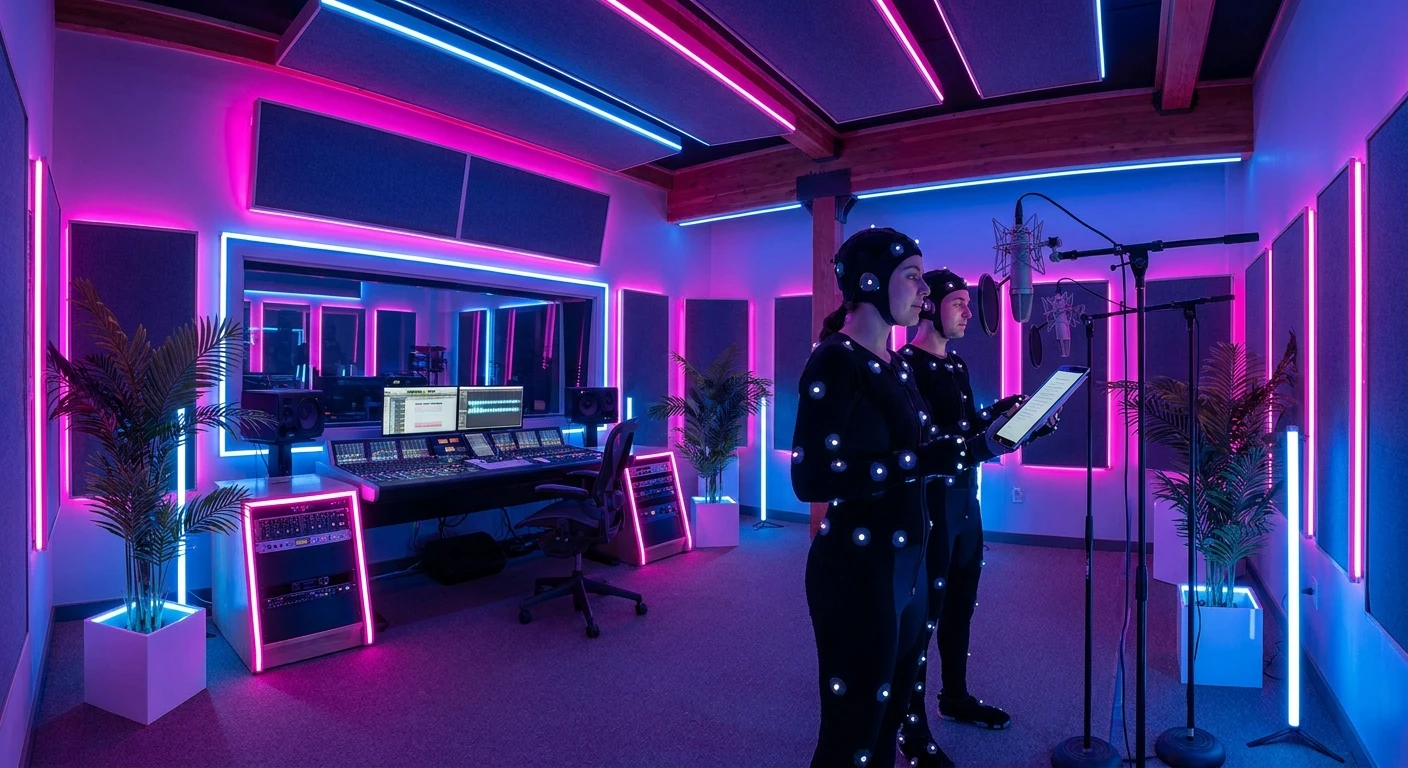
- Full-body motion capture: Performing scenes in restrictive, sensor-covered spandex suits alongside fellow actors on a bare soundstage.
- Dynamic vocal scaling: Recording the exact same line at three different volumes (whispering in stealth, talking normally, and screaming over gunfire).
- Facial geometry mapping: Wearing heavy, head-mounted camera rigs that capture every tiny micro-expression and eye twitch to map onto the 3D model.
Origins of Rockstar’s Casting Strategy
Looking back at the early 2000s, the landscape was entirely different. Titles like Grand Theft Auto: Vice City and San Andreas leaned heavily on star power. Having Ray Liotta, Samuel L. Jackson, or Burt Reynolds on the box was a massive selling point. It legitimized the medium in the eyes of the mainstream public. However, working with mega-stars presented unique challenges. Scheduling was a nightmare, and often the stars recorded their lines alone in a booth, separated from their scene partners. The performances were iconic, but they lacked the physical interplay that modern games require.
Evolution to Performance Capture
The turning point arrived with Grand Theft Auto IV and fully solidified with Grand Theft Auto V. The studio realized that true cinematic quality required actors to physically perform together in a room. They pivoted toward hiring incredibly skilled, though largely unknown, character actors. Performers like Ned Luke, Steven Ogg, and Shawn Fonteno became overnight legends because players connected with their raw, untethered performances. They were not just voices; they provided the physical framework for the characters, acting out the scenes exactly like a stage play.
Modern State of Interactive Acting
Today, the environment for the talent behind the streets of Leonida is more demanding than ever. The scripts are not just large; they are astronomical. Actors sign ironclad Non-Disclosure Agreements (NDAs) that last for years, forcing them to lie to their friends and families about what they do for a living. The modern state of video game acting requires a hybrid skillset combining the theatrical projection of stage acting with the hyper-subtle emotional control of film acting, all while pretending a styrofoam block is a stolen sports car.
The Technology Behind the Voices
You cannot talk about the performances without understanding the staggering technology capturing them. The studio utilizes heavily customized versions of the RAGE engine, paired with state-of-the-art volumetric capture volumes. A “volume” is a massive room surrounded by hundreds of infrared cameras. When the actors step inside, their physical movements are tracked down to the millimeter. Head-mounted cameras point directly at their faces, using specialized software to translate muscle movements directly into the digital rigs of the characters. This means a subtle smirk or a look of hesitation is entirely driven by the human performer, not hand-animated by a programmer later.
Volumetric Capture Mechanics
Capturing clean audio while actors are physically wrestling, running, or jumping around a soundstage is a logistical nightmare. Boom operators must dance around the actors without blocking the infrared cameras. The software must perfectly sync the spatial audio to the motion data so the animators know exactly where the voice is coming from in 3D space.
- Dynamic Frequency Isolation: Specialized software filters out the squeaking of the motion capture suits and the heavy breathing, isolating only the required dialogue.
- Synchronized Dual-Camera Rigs: Actors wear dual lenses pointed at their faces recording at 60 frames per second to catch complex emotional transitions.
- Algorithmic Spatial Audio: Sound engineers map the actor’s vocal projection to account for in-game environments, automatically adding reverb if the character is standing in a digital alleyway.
- Vocal Modulation Processing: Post-production teams adjust frequencies to simulate ambient interference, like a character speaking through a motorcycle helmet or over a radio.
Step 1: Mastering Vocal Warmups
If you want to train like a professional interactive performer, it starts with the vocal cords. The sheer stamina required is brutal. You need to establish a strict daily warmup routine. Lip trills, siren sirens, and breath control exercises are non-negotiable. Yelling over virtual helicopters for four hours straight will completely shred an unprepared throat. Hydration must start 24 hours before you step into the booth.
Step 2: Building a Character Demo
You need a demo reel that specifically highlights your versatility. Game directors do not just want a cool announcer voice; they want to hear you take damage, issue tactical commands, and deliver an emotional monologue. Structure your reel to show dynamic range. Go from a quiet, intimate conversation to an intense, high-stakes shout within the span of sixty seconds.
Step 3: Physicality in Voice Work
Never stand completely still in the booth. If your character is throwing a punch, physically mimic the motion while you deliver the line. The exertion changes the shape of your diaphragm and the resulting sound. Take movement classes, stage combat, or basic theater blocking. Your body and your voice must be entirely connected.
Step 4: Finding Representation
Booking AAA game roles without an agent is nearly impossible. Seek out talent agencies that have dedicated interactive or voice-over departments. You need representatives who understand union rates, buyout clauses, and the specific demands of the video game industry. A strong agent will get you into the rooms where the top-secret projects are casting.
Step 5: Auditioning for NDAs
When you get an audition for a massive project, it will be wrapped in secrecy. You will receive fake character names and a script that seems totally disjointed. Learn to read between the lines. Make strong, specific choices even if you do not know the full context of the game. Casting directors want to see you commit fully to the bizarre sides they provide.
Step 6: Understanding the Volume
If you book a mocap gig, get ready for the spandex. You must become comfortable wearing a skin-tight suit covered in markers and a heavy helmet. It gets incredibly hot, and the physical demands are similar to a harsh workout. Learn how to interact with wireframe props and scene partners while ignoring the massive cameras inches from your face.
Step 7: Preserving Vocal Health
After a grueling session of recording death screams and combat barks, implement strict vocal rest. Drink warm tea with honey, use a personal steamer to hydrate your vocal folds, and avoid talking for the rest of the evening. Longevity in this career depends entirely on how well you treat your instrument.
Myths & Reality
Myth: Only huge A-list celebrities get the main roles in the biggest games.
Reality: Major studios strongly prefer hiring skilled, lesser-known working actors. This maintains complete player immersion and ensures the talent is available for a multi-year development and recording cycle.
Myth: Voice acting is just standing in a small booth reading off a piece of paper.
Reality: Modern interactive acting involves full-body motion capture. The actors are physically performing the scenes together on a specialized soundstage, handling heavy props and coordinating stage combat.
Myth: Generative AI is completely replacing human performers in major releases.
Reality: While AI helps generate background crowd noise or ambient city sounds, lead characters require human emotional intelligence. The nuanced delivery of a joke or a tragic realization simply cannot be authentically replicated by a machine.
Myth: The main cast knows the entire storyline from the very first day of recording.
Reality: Scripts are heavily redacted. Actors frequently only receive their specific scenes, and sometimes fake scenes are recorded to obscure the true ending and prevent devastating internet leaks.
Who plays Lucia in the newest entry?
Based on extensive community research and vocal matching, Manni L. Perez is the most widely recognized talent behind Lucia. She brings a phenomenal blend of tough exterior acting and nuanced emotional delivery to the role.
Who is the voice of Jason?
The identity of Jason has been heavily debated, with names like Gregory Connors and Dylan Rourke consistently surfacing. The studio keeps the final official credits locked down, but the performance is clearly driven by an experienced stage or mocap actor.
Do these performers do their own physical stunts?
They perform all the basic physical acting—walking, arguing, driving posture—but dangerous actions like jumping off buildings or getting hit by cars are handed over to specialized, highly trained stunt professionals in the mocap suits.
How long does the entire recording process take?
A game of this massive scale typically requires actors to be on call for anywhere from three to five years, coming in for regular recording blocks as the script is constantly rewritten and expanded.
Are there still celebrity cameos on the in-game radio?
Yes, while the main cast is usually comprised of working actors, the in-game radio stations traditionally feature highly recognizable musicians, comedians, and media personalities acting as DJs.
How many lines of dialogue are actually recorded?
Previous major entries featured well over 160,000 lines of dialogue. Given the expanded dynamic interaction systems in Leonida, it is safe to assume the current word count completely dwarfs those previous records.
Why does the studio hide the cast list for so long?
Total secrecy prevents story leaks and keeps the public’s focus squarely on the game’s universe. The developers want players to fall in love with the characters themselves before they meet the real-world actors behind them.
The GTA 6 voice actors represent the absolute pinnacle of interactive performance art. They have endured years of grueling physical motion capture, intense vocal strain, and strict secrecy to deliver an experience that feels completely alive. Whether you are robbing a convenience store in the backwoods or cruising past the neon lights of the beachfront, remember the incredible human talent driving every shout, whisper, and laugh. Jump into the game today, turn up the volume, and appreciate the masterful performances that make Leonida feel like home!