
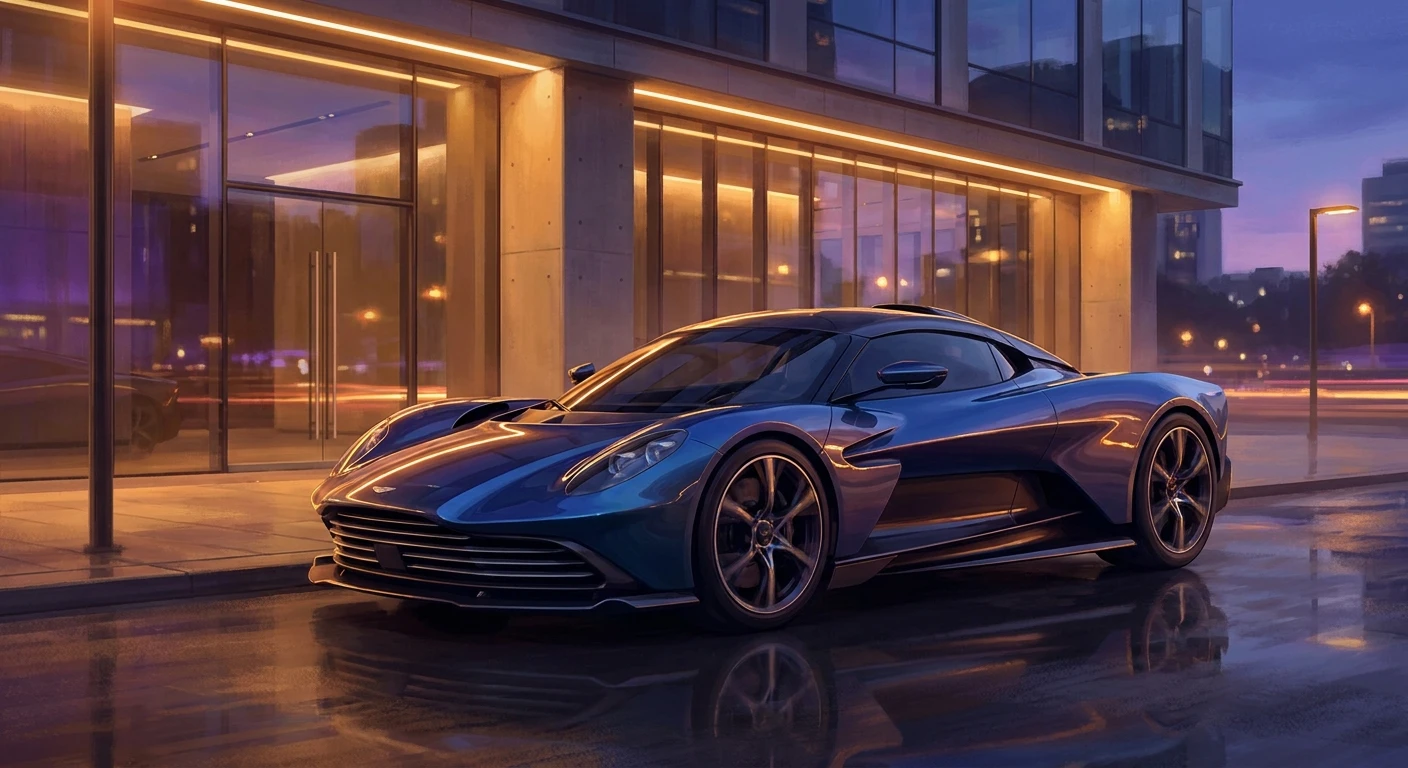
Understanding the Aston Martin Valhalla Price and Value
When you first hear the Aston Martin Valhalla price mentioned among automotive enthusiasts, the immediate reaction is typically a mixture of sheer awe and intense curiosity. How does a single plug-in hybrid hypercar command a financial commitment hovering around $800,000? You look at the sleek aerodynamic lines, the aggressive stance, and the sophisticated engineering, and you know immediately that this machine is far from ordinary. It sits comfortably in the highest tier of the ultra-luxury bracket, bridging the gap between track-only monsters and premium grand tourers. The cost required to secure such a masterpiece goes far beyond simply paying for raw materials and assembly. Buying into the Valhalla lineage means acquiring a piece of advanced engineering heavily influenced by elite motorsport technology.
To fully grasp the financial dynamics behind this vehicle, you have to look past the base sticker figure. The total investment reflects thousands of hours of wind-tunnel testing, the integration of a complex gasoline-electric hybrid powertrain, and an interior tailored to exact client specifications. This hypercar does not just represent a method of transportation; it acts as a rolling showcase of what the British manufacturer can achieve when constraints are lifted. Every dollar spent contributes to unmatched exclusivity, ensuring that owners join a highly restricted club of automotive connoisseurs who appreciate the delicate balance of extreme performance and striking aesthetics.
Read also: Apollo Evo Price: Complete Hypercar Cost Guide; The Exact KTM X Bow GT XR Price Guide.
The Core Value Proposition Behind the Investment
Determining whether the Aston Martin Valhalla price aligns with its real-world value requires a strict look at what the factory actually delivers. You are paying for a machine that utilizes an ultra-stiff carbon-fiber monocoque, a flat-plane crank V8 engine, and a trio of electric motors that provide instantaneous torque. For example, the F1-derived aerodynamic surfaces generate massive downforce without relying on enormous, drag-inducing fixed wings. Another clear example of the value proposition is the bespoke suspension setup, which utilizes pushrod technology to maintain optimal tire contact patches under severe cornering loads.
When you break down the physical components, the financial premium makes complete sense. The integration of high-end materials directly impacts both the driving experience and the vehicle’s long-term collectability.
| Engineering Feature | Performance Benefit | Estimated Cost Impact |
|---|---|---|
| Bespoke Carbon Fiber Tub | Maximum chassis rigidity and lightweight handling | Extremely high manufacturing and material costs |
| Plug-In Hybrid Powertrain | Seamless power delivery and pure electric urban mode | Massive R&D investment and complex software integration |
| Active Aerodynamics | Generates extreme downforce for high-speed cornering | Expensive wind tunnel testing and moving component fabrication |
Beyond the fundamental engineering, the final transaction amount is shaped by three primary financial pillars that every prospective owner must navigate:
- The Base Allocation Cost: The starting figure grants you access to the standard specification, though very few buyers leave the vehicle in its default state.
- The Q by Aston Martin Commission: Personalization can easily add hundreds of thousands of dollars, covering everything from custom exterior paint formulations to uniquely dyed interior leathers and exposed carbon fiber tinting.
- Long-Term Operational Expenses: Ownership involves specialized insurance policies, climate-controlled storage, and routine maintenance by factory-trained technicians who must monitor both the mechanical systems and the high-voltage battery architecture.
Origins of the Valhalla Project
The journey to the final Aston Martin Valhalla price began with a concept vehicle known internally as the AM-RB 003. Initially conceived as a direct collaboration between the British marque and Red Bull Racing, the project aimed to create a more road-focused sibling to the uncompromising Valkyrie. The original vision promised a bespoke twin-turbo V6 engine developed entirely in-house. This early concept generated massive hype, positioning the brand to compete directly with the highest echelon of European supercar manufacturers. The initial financial estimates were fluid, reflecting the ambitious nature of creating a completely new engine architecture from scratch.
Evolution from Concept to Production
As development progressed, the engineering strategy underwent a massive shift. The company opted to abandon the bespoke V6 in favor of a proven, incredibly potent 4.0-liter flat-plane crank V8 sourced from Mercedes-AMG. This decision completely altered the development timeline and the cost structure. By adopting a trusted, high-performance V8 and pairing it with a complex tri-motor hybrid system, the engineers could focus heavily on chassis dynamics and software integration. The transition ensured greater reliability and performance predictability, but the sophisticated hybrid integration kept the projected retail figures firmly in the hypercar stratosphere.
Modern State of the Hypercar Market
By 2026, the global market for ultra-exclusive vehicles has fully embraced electrification. The Aston Martin Valhalla price sits comfortably among heavy-hitting rivals that also utilize plug-in hybrid technology to achieve massive horsepower figures while adhering to strict global emissions regulations. Competitors have established a baseline for what wealthy enthusiasts are willing to pay for electrified performance. The Valhalla distinguishes itself by offering a unique British aesthetic, prioritizing driver engagement and stunning visual proportions over pure, clinical lap times. The limited production run of just 999 units guarantees that demand outstrips supply, keeping secondary market values exceptionally strong.
Plug-In Hybrid Powertrain Architecture
Beneath the sculpted exterior lies a powertrain that redefines the brand’s performance metrics. The core is the AMG-sourced 4.0-liter twin-turbo V8, featuring a flat-plane crankshaft that allows the engine to rev freely and aggressively. This internal combustion engine is supplemented by three electric motors. Two motors are mounted on the front axle, providing advanced torque vectoring and all-wheel-drive traction, while the third motor is integrated directly into the transmission. This sophisticated layout eliminates the need for a traditional reverse gear; the car simply spins the electric motors backward to reverse. The entire system is governed by complex algorithms that manage power deployment seamlessly, ensuring the driver feels a continuous surge of acceleration.
Active Aerodynamics and Carbon Fiber Tub
The physical structure of the vehicle is just as advanced as its engine. Built around a central carbon-fiber tub, the chassis is immensely strong and astonishingly light. This tub serves as the perfect foundation for the active aerodynamic systems. Rather than bolting a massive, static wing to the rear deck, the designers utilized flex-foil technology and active underbody channels. These surfaces shift dynamically depending on speed, steering angle, and braking pressure to keep the vehicle planted to the tarmac.
- The combined hybrid system output exceeds 998 horsepower, delivering hypercar-level straight-line acceleration.
- The eight-speed dual-clutch transmission operates without a mechanical reverse gear, saving crucial weight.
- A Formula 1-style pushrod front suspension architecture guarantees unmatched handling precision on track.
- An electric-only driving mode provides silent, emission-free urban mobility for roughly 15 kilometers.
Step-by-Step Guide to Commissioning Your Hypercar
Purchasing a vehicle in this financial bracket is a curated journey. Here is the exact timeline buyers follow to bring their bespoke machine to life.
Step 1: Initial Allocation and Dealer Outreach
The first phase involves proving your purchasing history and brand loyalty. Dealerships prioritize existing clients who have previously acquired flagship models. You must express your interest early, often placing a substantial expression-of-interest deposit simply to be considered for one of the 999 available production slots.
Step 2: Securing Your Build Slot
Once the factory approves your profile, your dealer will offer a formal contract. At this point, a significant non-refundable deposit is required to lock in your specific chassis number. This contract legally binds the allocation and provides you with an estimated timeline for the build process.
Step 3: The Q Commissioning Experience
This is where the true Aston Martin Valhalla price begins to climb. You will engage directly with the Q by Aston Martin division. Clients often travel to the factory headquarters or specialized design studios to select unique exterior hues, interior leathers, and custom stitching. Everything from the color of the brake calipers to the finish of the interior switchgear is open to customization.
Step 4: Finalizing Powertrain and Track Options
While the hybrid V8 powertrain is standard, buyers must decide on specific track-oriented options. This includes selecting the type of tire compounds delivered with the vehicle, upgrading to specialized lightweight racing seats, or adding multi-point harnesses for track days.
Step 5: Aerodynamic Package Selection
Clients can choose different levels of exposed carbon fiber for the exterior aerodynamic elements. Opting for tinted carbon fiber or specialized clear coats on the front splitter, rear diffuser, and side skirts dramatically alters the visual presence of the car and requires highly specialized manufacturing techniques.
Step 6: Managing Production Timelines
Building a hypercar is a slow, meticulous process. You will receive regular updates, photographs, and sometimes video footage from the factory floor as your specific engine is tested and the carbon tub is hand-assembled. Patience is critical, as quality control at this level cannot be rushed.
Step 7: Delivery and Post-Sale Support
The final step is the handover, which can occur at the factory, your local dealership, or even delivered directly to your private garage via specialized transport. The dealer will walk you through the complex hybrid charging procedures, suspension settings, and digital interfaces, ensuring you understand exactly how to operate the machine safely.
Hypercar Myths and Reality
Myth: The vehicle is simply a toned-down, cheaper version of the track-focused Valkyrie.
Reality: The Valhalla is an entirely bespoke platform. While it shares some aerodynamic philosophies, it is built around daily usability, featuring a completely different chassis, a different engine architecture, and a hybrid philosophy designed for road compliance rather than uncompromising track dominance.
Myth: Maintenance requires a full factory pit crew just to start the engine.
Reality: Unlike track-only specialty cars, this model is designed to be operated by the owner without specialized factory support. The hybrid system starts normally with the push of a button, though routine maintenance does require highly trained dealership technicians.
Myth: The advertised sticker value is exactly what every owner pays.
Reality: Almost zero units leave the assembly line without extensive bespoke options from the Q division. These personalized touches frequently push the final transaction amount hundreds of thousands of dollars above the baseline MSRP.
Frequently Asked Questions
What is the exact Aston Martin Valhalla price?
The base cost typically hovers around $800,000. However, final transaction amounts vary wildly depending on local market taxes, import duties, and the extensive bespoke customization options chosen through the Q division.
How does the cost compare to its Italian rivals?
It sits significantly higher than mass-produced plug-in hybrids like the Ferrari SF90 Stradale. The premium is justified by its strict production cap of 999 units, ultra-exclusive carbon construction, and bespoke design elements.
Are customization fees included in the base cost?
No. The base cost only covers the standard factory specification. Any unique paint colors, interior materials, or exposed carbon fiber finishes represent separate line items that dramatically increase the final total.
Will the value appreciate over time?
Hypercars with strict production limits generally hold their value exceptionally well. Given the transition toward full electrification, this high-performance V8 hybrid represents an era of automotive history that collectors highly prize.
Does the hybrid battery require special maintenance?
Yes. The high-voltage system requires regular software diagnostic checks and specific storage protocols. Owners must use the factory-supplied trickle charger when the vehicle is parked for extended periods to maintain battery health.
How much does insurance cost for this model?
Standard automotive policies do not apply. Owners must secure specialized exotic vehicle or collector policies, which factor in the extreme replacement cost of the carbon tub and customized components.
What is the warranty on the hybrid system?
The manufacturer provides a comprehensive warranty covering both the internal combustion engine and the high-voltage battery components, ensuring owners are protected against early component failures.
Can you drive it purely on electric power?
Yes. The front-mounted electric motors allow the vehicle to be driven in complete silence for short distances, making it surprisingly practical for navigating tight urban environments or early morning departures without waking neighbors.
Understanding the final financial commitment requires looking far beyond the sticker. You are acquiring a masterclass in modern engineering, bespoke luxury, and hybrid performance. If you are ready to explore the allocation process, contact your local authorized luxury dealership to verify current availability and discuss your specific commissioning requirements today.