
The True Femcel Meaning Explained Simply
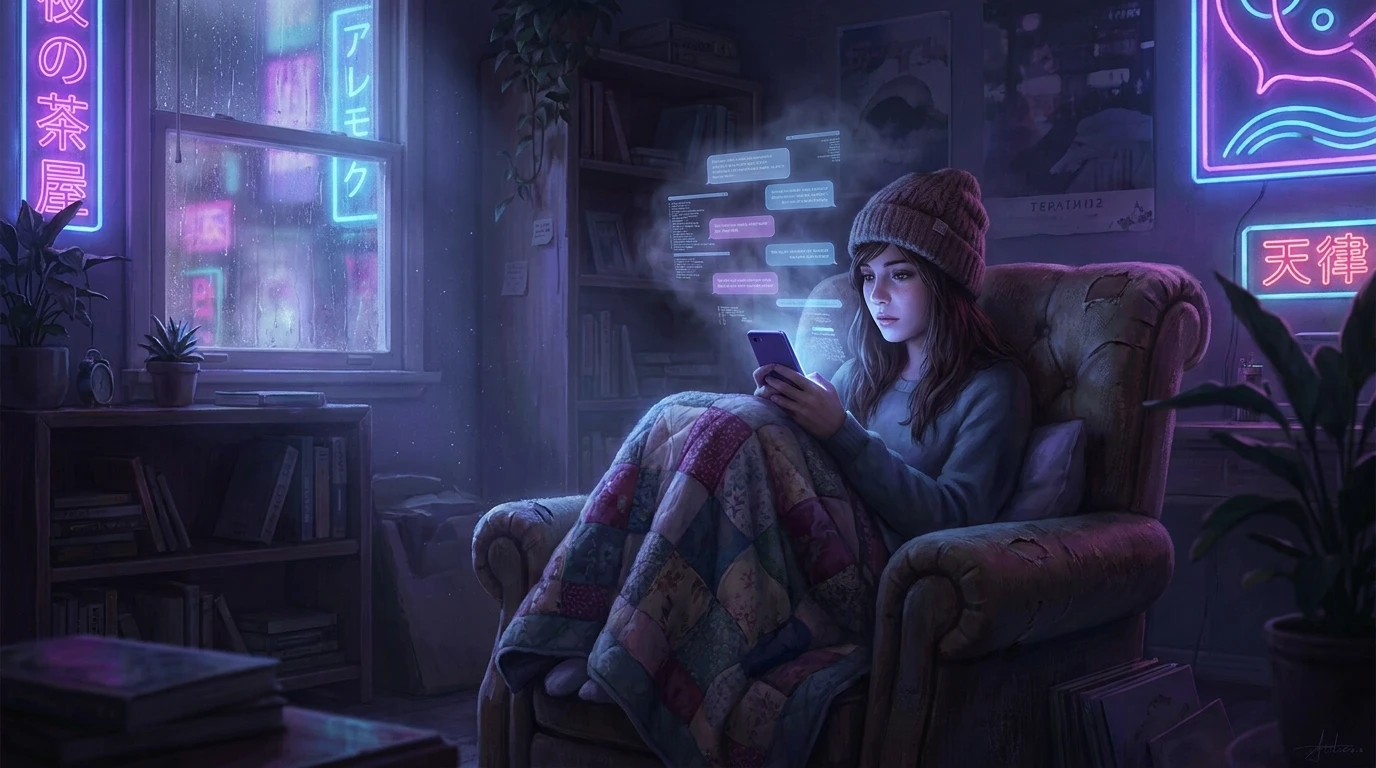
If you’ve been scrolling through social media lately, you’ve probably searched for the exact femcel meaning after seeing it dropped casually in meme captions or video comments. Honestly, keeping up with internet slang in 2026 feels like a full-time job. Just the other day, I was sitting in a crowded coffee shop in downtown Kyiv, nursing an espresso, when I overheard a group of university students passionately debating female internet subcultures. One of them pulled up a viral clip, and suddenly the conversation shifted entirely to online isolation, hyper-specific beauty standards, and digital echo chambers. That quick cafe moment made me realize just how misunderstood this specific subculture really is.
A lot of folks assume it’s just the exact female equivalent of a male incel, but that barely scratches the surface. The reality is far more complex. We are looking at an entirely distinct online phenomenon built around internalizing societal pressures, venting about unattainable physical aesthetics, and finding an unconventional sense of belonging in obscure corners of the web. Understanding this internet movement requires looking past the shocking memes and seeing the raw, unfiltered emotions driving young women to label themselves this way.
Read also: Barry Deley: The Incredible Journey of a Sports Broadcaster; The Truth About ben o'hara byrne.
Why Understanding This Subculture Really Matters
To grasp the full scope of what drives this online community, you have to look at the psychological benefits and the immense harms it creates for its members. On the positive side, discovering a group of people who share your exact insecurities can feel incredibly validating. Many women turn to these forums because they feel invisible in everyday life, and finding a digital space where their struggles are acknowledged brings a weird sense of comfort. However, the dark side is intensely self-destructive. These communities often mutate into echo chambers of self-hatred, where members constantly reinforce each other’s negative self-image.
The core value proposition for members joining these spaces usually revolves around radical, brutal honesty regarding lookism—the prejudice or discrimination toward people who are considered physically unattractive. For example, you have the “pink pill” ideology, which teaches that a woman’s entire worth in society is dictated exclusively by her bone structure and facial symmetry. Another prominent example is the intense hyper-fixation on specific physical flaws, where members use clinical terms to describe their everyday appearance, completely stripping away their own humanity.
| Concept | Core Belief System | Primary Coping Mechanism |
|---|---|---|
| Incel | Society owes them romance; external blame. | Anger directed outward at society. |
| Femcel | They are inherently flawed; internal blame. | Extreme self-deprecation and venting. |
| Tradwife | Strict adherence to traditional gender roles brings peace. | Performing hyper-femininity online. |
If you want to break down the foundational pillars of this specific internet subculture, it usually falls into these distinct categories:
- Venting about unattainable beauty standards: A relentless critique of how social media filters and cosmetic surgery have ruined realistic expectations.
- Radical acceptance of isolation: Embracing the idea that they will be involuntarily celibate forever, rather than trying to change their circumstances.
- Creation of niche aesthetics: Developing a unique digital footprint, complete with specific slang, dark humor, and self-referential memes that outsiders cannot decipher.
The Origins of the Movement
You cannot fully grasp the current landscape without tracing things back to the beginning. Interestingly enough, the original term “involuntary celibate” was coined in the late 1990s by a queer woman named Alana. She started an online project meant to be a supportive, inclusive environment for people of all genders who struggled with dating due to shyness, physical awkwardness, or neurodivergence. It was a wholesome initiative completely devoid of the toxicity we see today. However, as the years went by, the male-dominated side of the community splintered off and co-opted the term, filling it with hostility and misogyny. The female members were pushed out of the very space a woman had created.
Evolution Through Reddit and Tumblr
By the mid-2010s, women who felt entirely alienated by mainstream dating culture began carving out their own private corners on platforms like Tumblr and Reddit. Subreddits like r/Trufemcels became digital havens where thousands of users gathered to share their experiences of being ignored or mistreated purely based on their looks. Unlike their male counterparts, these women rarely promoted violence against others. Instead, the violence was entirely psychological and directed inward. They created extensive glossaries of terms to describe their features, analyzing their bodies with a cold, almost surgical detachment. Eventually, Reddit banned many of these communities due to their promotion of digital self-harm, scattering the user base across the web.
The Modern State of the Community
Fast forward to 2026, and the landscape has fragmented entirely. You rarely see centralized hubs anymore. Instead, the community thrives in closed Discord servers, hyper-niche TikTok algorithms, and anonymous X accounts. The aesthetic has also morphed, blending heavily with “dissociative feminism” and dark coquette imagery. Today’s iteration is less about literal celibacy and more about a broader rejection of modern hustle culture, performative self-care, and the exhaustion of trying to be palatable to the male gaze. It has become an umbrella identity for generalized female alienation.
Sociological Mechanics of Echo Chambers
From a sociological standpoint, these groups function as perfect case studies in group polarization. When individuals who already hold negative self-views gather in a secluded digital space, their shared rhetoric rapidly intensifies. The algorithm rewards the most extreme, emotionally charged posts, pushing the baseline of the conversation further toward despair. Technical sociological concepts like “homophily”—the tendency of individuals to associate and bond with similar others—are on full display. They build high walls around their community by using complex jargon, which serves as a purity test to keep well-meaning outsiders and casual observers away.
Psychological Drivers: Dysmorphia and Isolation
Psychologically, chronic participation in these spaces correlates heavily with specific mental health struggles. The continuous hyper-fixation on physical flaws operates on the exact same cognitive pathways as Body Dysmorphic Disorder (BDD). When you stare at an alleged physical defect through the lens of a highly critical community, your brain literally alters its perception, magnifying the perceived flaw until it takes over your entire identity.
- Digital Self-Harm: Actively seeking out content or comments that trigger emotional pain or reinforce deep-seated insecurities.
- Parasocial Resentment: Developing one-sided negative relationships with influencers who represent the unattainable physical ideal.
- Algorithmic Reinforcement: Social media platforms tracking dwell time on negative content and serving up an endless feed of similar, despair-inducing videos.
- Cognitive Distortion: Engaging in “all-or-nothing” thinking where one minor physical imperfection completely invalidates a person’s entire self-worth.
7-Day Digital Detox Protocol: Escaping the Echo Chamber
If you or someone you know has fallen deep into the rabbit hole of negative internet subcultures, breaking free requires deliberate, structured action. You cannot just log off for an hour and expect your worldview to shift. You need a dedicated plan to rewire your digital habits and your real-world connections. Here is a practical, seven-day protocol designed to cleanse your mental palate and rebuild a healthier relationship with technology.
Day 1: Audit Your Social Media Feed
Start by doing a ruthless audit of every single platform you use. Unfollow any account that makes you feel bad about your appearance, your social status, or your life trajectory. If an influencer’s perfectly curated lifestyle triggers a spiral of self-hatred, they have to go. Replace them with content that has absolutely nothing to do with human aesthetics—think architecture, cooking, animal rescues, or woodworking. Force the algorithm to learn new preferences.
Day 2: Identify Triggering Content
Grab a notebook and write down the exact types of posts that ruin your mood. Are they videos of people talking about bone structure? Are they memes about being forever alone? Once you identify the specific triggers, you gain power over them. Recognizing the pattern is the first step to stopping the emotional reaction before it ruins your entire afternoon.
Day 3: Mute and Block Keywords
Take advantage of the technical features built into your social apps. Go into your privacy settings on X, TikTok, and Instagram, and manually input all the jargon associated with this subculture. Block words related to lookism, the pink pill, and specific community slang. By actively building a firewall, you prevent the algorithm from sneaking triggering content onto your “For You” page.
Day 4: Reconnect With Offline Friends
Digital isolation thrives when you lack real-world anchors. Reach out to a friend, a family member, or a coworker you haven’t spoken to in a while. Suggest grabbing a coffee, taking a walk, or just running errands together. The goal isn’t to have a deep, emotional conversation about your mental health; the goal is simply to exist in a physical space with another human being and remember that the real world is infinitely more forgiving than the internet.
Day 5: Curate Positive Digital Spaces
Nature abhors a vacuum. If you remove the toxic communities, you need to replace them with positive or neutral ones. Join forums dedicated to your actual hobbies. Whether it’s knitting, retro video games, local history, or learning a new language, find digital spaces where the currency of respect is based on shared interests and skills, rather than physical appearance or relationship status.
Day 6: Engage in Offline Hobbies
Spend at least three hours completely detached from any screen. Read a physical book, bake bread from scratch, paint a terrible picture, or organize your closet. Doing tasks that require your hands and physical attention grounds your nervous system. It reminds your brain that you are a multifaceted person capable of creating things, not just a passive consumer of digital despair.
Day 7: Reflect on Your Mental Health Shift
Take time on the final day to journal about how you feel compared to a week ago. Notice if your baseline anxiety has dropped. Pay attention to how much lighter your thoughts feel when you aren’t constantly digesting other people’s misery. Use this reflection as motivation to maintain your new digital boundaries permanently.
Myths vs. Reality
There is a massive amount of misinformation surrounding this topic. Let’s clear the air and separate the fiction from the actual facts.
Myth: They are identical to male incels and pose the exact same societal threats.
Reality: The male counterpart has a documented history of externalized violence and entitlement. This female subculture is characterized almost entirely by intense internalizing, self-loathing, and social withdrawal, posing a threat primarily to their own mental health rather than the public.
Myth: The community is entirely focused on dating and romance.
Reality: While romantic isolation is the starting point, the philosophy heavily critiques modern capitalism, the beauty industry, and societal lookism. It’s often more about a lack of general societal respect than just lacking a romantic partner.
Myth: It’s just a phase for dramatic teenagers.
Reality: A significant portion of active participants are women in their late twenties and thirties who have experienced long-term social alienation and are grappling with the reality of aging in a hyper-visual society.
What does the term mean exactly?
It refers to a woman who feels entirely excluded from romantic and social opportunities due to perceived physical flaws and strict societal beauty standards.
Who invented the word?
The root word “incel” was coined by a woman named Alana in the late 90s, but the gender-specific female prefix evolved later on platforms like Tumblr and Reddit to differentiate from the toxic male spaces.
Is it a dangerous community?
It isn’t dangerous in a physical, real-world violence sense, but it is highly dangerous to an individual’s mental health due to the promotion of severe digital self-harm and body dysmorphia.
What is the pink pill?
It is a nihilistic internet philosophy claiming that a woman’s value is biologically and socially determined entirely by her physical attractiveness, leaving no room for personality or achievements.
Can someone leave this mindset?
Absolutely. Breaking away requires heavily moderating internet usage, seeking real-world social interactions, and often pursuing professional therapy to combat deep-seated body dysmorphia.
How does it differ from feminism?
Mainstream feminism seeks to dismantle oppressive systems and empower women. This subculture often views those systems as absolute and unbeatable, resulting in fatalism rather than activism.
Are there famous examples?
There aren’t many mainstream celebrities who claim the title, but the aesthetic is frequently associated with specific “sad girl” internet icons, fictional movie characters who are socially isolated, and niche micro-influencers.
Final Thoughts
Navigating the complex webs of internet culture requires patience and a lot of critical thinking. Behind the abrasive memes and shocking slang lies a very real epidemic of loneliness and self-doubt affecting young women across the globe. By understanding the root causes of this phenomenon, we can foster more empathy and perhaps build healthier digital environments. If you found this breakdown helpful, share it with a friend who loves deep-diving into internet mysteries, and leave a comment below about what digital subculture we should decode next!






