
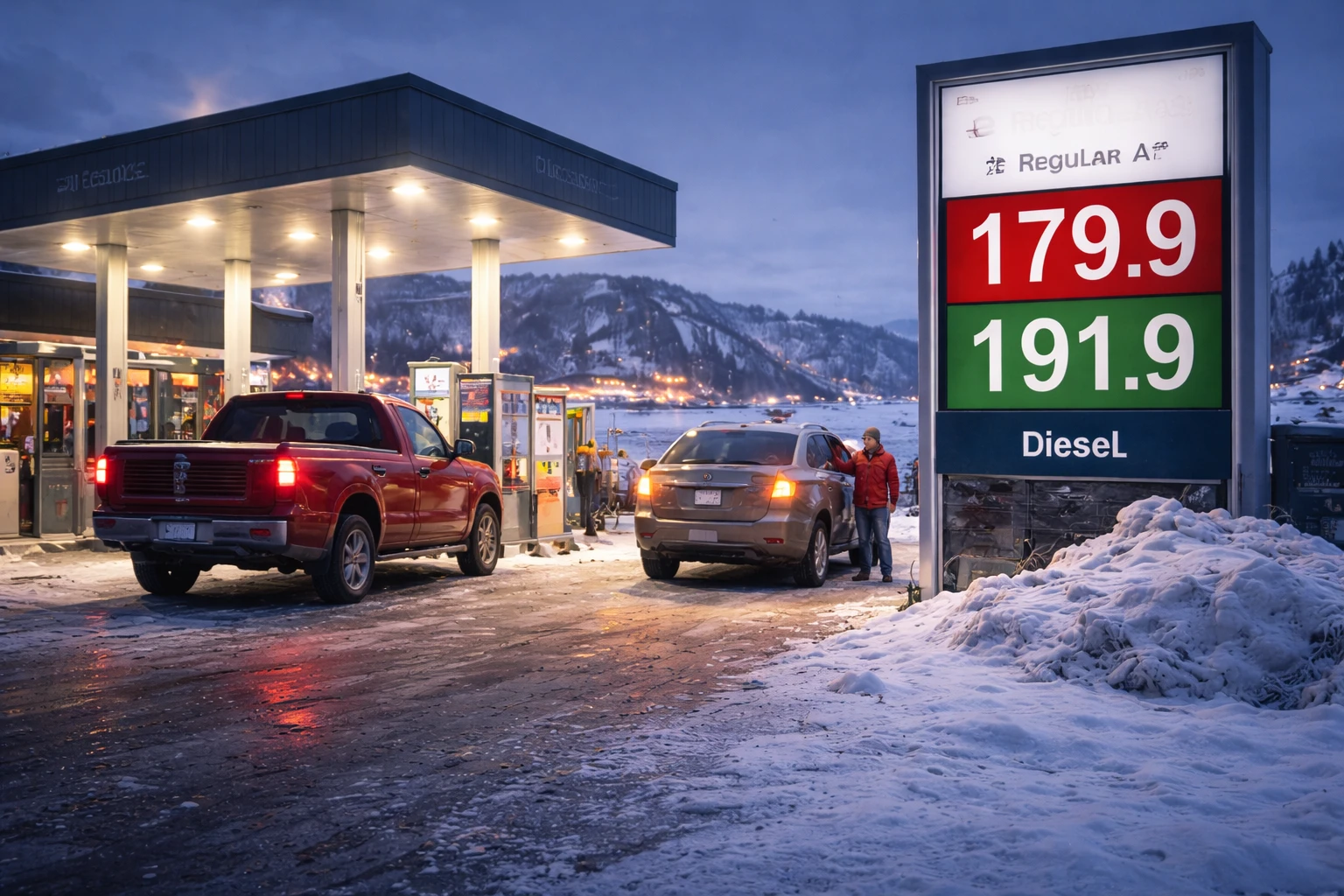
The Pain at the Pump in Newfoundland and Labrador
If you live in St. John’s, Corner Brook, or anywhere in between, you probably don’t need a news report to tell you that gas prices are out of control. You see it every time you pull up to the station and watch the numbers on the pump climb faster than a North Atlantic gale. It feels like every Thursday, we’re all holding our breath to see what the Public Utilities Board (PUB) is going to do. Usually, it’s not great news for our wallets.
But why is this happening? And why does it feel like we’re getting hit harder here than folks in Ontario or Alberta? Honestly, it’s a mix of global messiness and some very specific local quirks. Living on an island (or in a remote part of Labrador) comes with a “geographic tax” that we often forget about until things go sideways.
Let’s be real: fuel isn’t just a luxury here. We don’t exactly have a subway system connecting Gander to Grand Falls. We drive. A lot. When gas goes up, everything from your groceries to your Amazon delivery gets pricier too. It’s a domino effect that hits the rock harder than most places.
Breaking Down the Numbers: Where Your Money Goes
When you pay $1.80 or $1.90 for a litre of regular, that money isn’t all going to the gas station owner. In fact, those local stations often make the thinnest margins. Most of that cash is split between the actual cost of the crude oil, the refining process, transportation, and, of course, taxes.
In Newfoundland and Labrador, our pricing is regulated. The PUB sets a maximum price based on market data. While this stops stations from price gouging during a storm, it also means we don’t see the “gas wars” you might find in bigger cities on the mainland.
Estimated Price Breakdown per Litre
| Component | Approximate Cost (Cents) | Description |
|---|---|---|
| Market Benchmark | 85 – 95 | The base price of refined fuel on the NY market. |
| Federal Excise Tax | 10.0 | Fixed rate across Canada. |
| Provincial Tax | 14.5 | Direct revenue for the NL government. |
| Carbon Tax | 17.6 | Federal levy (increasing annually). |
| Total Taxes + Margins | Varies | Includes delivery and retail markup. |
The Carbon Tax Elephant in the Room
You can’t talk about gas prices in Canada right now without mentioning the federal carbon tax. It’s a polarizing topic, to say the least. For us in NL, the impact is felt double because we rely so heavily on furnace oil and diesel for transportation.
The idea behind the tax is to push people toward “greener” choices. But here’s the kicker: if you live in a rural outport, you can’t exactly trade your pickup for a Tesla and hope for the best. The infrastructure just isn’t there yet. While the federal rebates help offset the cost for some families, the immediate sting at the pump is hard to ignore.
And it’s not just about the car. The carbon tax affects the trucks that bring our food across the Gulf. When the ferry rates go up or the trucking companies have to pay more for diesel, those costs are passed straight to us at the checkout counter. It’s a tough pill to swallow when the cost of living is already soaring.
Supply Chains and the “Island Factor”
Newfoundland is literally at the end of the line. Most of our fuel comes via tanker. If there’s a delay in shipping, or if the refinery in Saint John, New Brunswick, has an outage, we feel it. We don’t have a pipeline bringing cheap oil from the west. Everything we use has to be moved by sea or road, and that adds a layer of vulnerability.
Logistics in NL are a nightmare even on a good day. Think about the winter of 2024-we had storms that shut down the ferry for days. When the supply chain gets squeezed, prices stay high.
* Shipping costs: Fuel has to be barged or shipped, adding cents to every litre.
* Storage capacity: We have limited tank space, meaning we are more sensitive to short-term market spikes.
* Labrador logistics: For folks in the Big Land, fuel often has to be pre-shipped or moved over massive distances, leading to even higher prices.
Global Events and the Local Pump
Even though we produce oil offshore at Hibernia and Hebron, we don’t pay “local prices.” Oil is a global commodity. If there’s a conflict in the Middle East or a production cut by OPEC+, the price of a barrel goes up everywhere.
The problem is that the oil we pump out of the North Atlantic is mostly sold on the world market. We then buy back refined gasoline at market rates. It seems backwards, right? We’re an oil-producing province, yet we have some of the highest fuel costs in the country. It’s one of those local frustrations that has people grumbling at every Tim Hortons in the province.
How to Survive the Price Surges
So, what can we actually do? Unless you’re planning on buying a horse and buggy, you’re stuck paying for gas. But there are a few ways to take the edge off.
Practical Tips for Saving Fuel
* Watch the PUB: They usually announce changes on Thursday mornings. If a big hike is coming, fill up Wednesday night.
* Loyalty programs: Use cards like PC Optimum or Journie. Those 3 cents off per litre add up over a month.
* Maintenance: It sounds like your dad talking, but keeping your tires inflated properly really does save gas.
Comparison of Regional Max Prices (Typical Example)
West Coast$1.83$2.06
| Region | Regular Gas Max | Diesel Max |
|---|---|---|
| Avalon Peninsula | $1.82 | $2.05 |
| Central NL | $1.85 | $2.08 |
| Labrador City | $1.75 | $2.15 |
What’s Next for Fuel in NL?
Looking ahead, it doesn’t seem like the $1.20 days are coming back anytime soon. The federal government is committed to increasing the carbon price every April for the next several years. Plus, the global shift toward electric vehicles (EVs) is putting less investment into traditional oil refining, which could keep supply tight.
But it’s not all doom and gloom. As more charging stations pop up across the TCH, more Newfoundlanders are making the switch. For those of us sticking with internal combustion, we’re just going to have to be smarter about how we drive.
Is the PUB doing its job? Some say yes, it protects us from wild daily swings. Others say it keeps prices artificially high. Either way, it’s the system we have. The best thing you can do is stay informed and maybe carpool when you can.
A Look at Alternative Energy in the Province
We’ve got wind, we’ve got hydro, and we’ve got plenty of rain. The province is talking a lot about green hydrogen and expanding Churchill Falls. But for the average person in Marystown or Stephenville, that doesn’t help fill the truck today.
There’s a bit of a disconnect between the “green future” and the “expensive present.” Transitioning an entire province’s economy and infrastructure takes decades. In the meantime, the people of NL are the ones bearing the brunt of the cost.
* Electric Vehicle Incentives: The provincial government offers rebates, but the upfront cost of an EV is still high.
* Heat Pump Grants: Many are switching from oil heating to electric heat pumps to save on home heating fuel.
* Public Transit: St. John’s is trying to improve the Metrobus, but for the rest of the province, a car is a necessity.
Why does gas cost more in Central than in St. John’s?
It’s mostly about trucking costs. The fuel is landed in ports like Holyrood or St. John’s, and the further it has to be driven by tanker truck, the higher the “zone” price set by the PUB.
When does the PUB change gas prices?
The regular “adjustment” happens at midnight on Wednesday (so, Thursday morning). However, they can do an “interrupted adjustment” if market prices shift by more than 6 or 7 cents in a single day.
Is the carbon tax really the main reason for high prices?
It’s a big part of it, especially the recent increases. But it’s not the only reason. Global oil demand and the Canadian dollar’s value against the US dollar play huge roles too.
Why don’t we just use the oil we produce offshore?
Our offshore oil is crude. We don’t have a large-scale refinery in NL that processes that specific type of crude into the gasoline you use in your car. It’s easier and cheaper (logistically) to sell our crude and buy refined fuel from the global market.
Does the provincial government make money off high gas prices?
Yes, through the provincial gas tax and HST. Some people argue the province should cut its tax when prices get too high, which they have done in the past to provide some relief.
Will prices ever go back down to $1.30?
Honestly? Probably not for a sustained period. Between inflation, carbon pricing, and the cost of maintaining aging refineries, the baseline for fuel is much higher than it used to be.
Are diesel and furnace oil prices linked?
They are very similar products. That’s why when you see gas go up, your home heating bill usually follows suit. It’s all part of the same refined “distillate” family.
Closing Thoughts on the Fuel Situation
At the end of the day, gas prices in Newfoundland and Labrador are a tough pill to swallow. We’re a province of commuters, travelers, and people who love to get out in the woods. High fuel costs aren’t just an inconvenience; they change how we live. While we can’t control what happens in global oil markets or what the folks in Ottawa decide about taxes, we can stay savvy.
Check the prices, use your points, and maybe ease off the lead foot on the highway. We’ve survived worse in this province, and we’ll get through this too-even if it costs us a bit more to get where we’re going. Keep an eye on those Thursday updates, and stay safe on the roads.